logo
Tel:
Tellhow Technology (Chongqing) Co., Ltd.
Nasz silnik, oszczędzaj energię, napędzaj swój sukces!
Dom Blog

Powering Through -162°C Extremes

Im Online Czat teraz
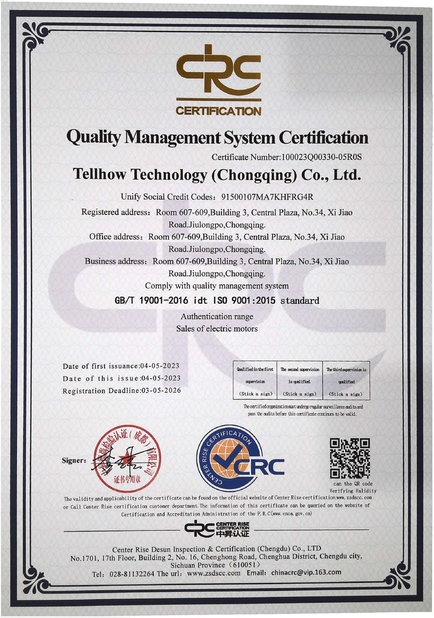
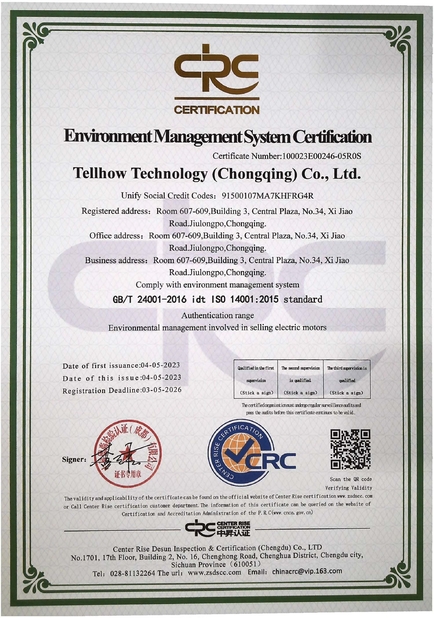
Orzecznictwo
Chiny Tellhow Technology (Chongqing) Co., Ltd. Certyfikaty
Opinie klientów
Silnik działa doskonale przy niskim hałasie, a usługa zdalnego sterowania montażem wideo jest doskonała.

—— Micha Gladuszenko

Fabryka jest bardzo rygorystyczna i poważnie traktuje technologię i może dostarczyć bardzo naukowych sugestii dotyczących dostosowywania szczegółów silników do naszego środowiska użytkowania. To bardzo wiarygodna firma.

—— Nur Rizky Amalia

firma Blog
Powering Through -162°C Extremes
najnowsze wiadomości o firmie Powering Through -162°C Extremes
Explosion-Proof Motor Selection Guide for LNG Cryogenic Applications: Powering Through -162°C Extremes
1. The Cold Safety Paradox of LNG

Liquefied natural gas (LNG) is cooled to -162°C at atmospheric pressure, shrinking its volume by approximately 600 times for efficient transport and storage. However, once leaked, LNG rapidly vaporizes into methane gas (explosive range 5%–15%) and forms visible white vapor clouds in cold environments.

In 2022, an LNG receiving terminal in Australia experienced a motor base weld crack due to low-temperature brittleness on a BOG (Boil-Off Gas) compressor motor. Severe vibration triggered emergency shutdown, requiring two weeks for repair and impacting approximately 150,000 tons of LNG send-out. Root cause: motor structural materials were not specified for impact toughness below -40°C.

2. Five Critical Challenges for LNG Motors
  1. Extremely Low Ambient Temperature

    • Surrounding areas of LNG storage tanks can drop to -50°C

    • BOG compressor rooms typically operate at -30°C to -20°C in winter

    • Standard motor steels undergo ductile-to-brittle transition below -40°C

  2. Thermal Shock and Frost Formation

    • LNG pipe valve leaks can cause local temperatures to plummet from ambient to below -100°C in seconds

    • Rapid frost accumulation on motor surfaces; frost entering terminal boxes may cause insulation failure

  3. Methane Gas Characteristics

    • Methane is lighter than air (0.72 kg/m³), accumulating near ceilings and roof corners

    • LEL of 5% is less stringent than hydrogen but still requires rigorous protection

  4. BOG Handling Dynamics

    • Natural evaporation from LNG tanks generates BOG with frequent pressure fluctuations (0.1–0.5 barg)

    • BOG compressor motors must handle frequent start-stop cycles and wide load variations

  5. Cold Shrinkage and Shaft Alignment Stability

    • Differential thermal contraction between motor shaft and bearing housings can alter bearing clearance

    • Coupling alignment drifts with temperature changes

3. Recommended Protection Scheme: Ex db IIB T3 Gb + Low-Temperature Extended Life Design
Ex db IIB T3 Gb

Parameter

Meaning

Significance for LNG

Ex db

Flameproof enclosure

Flame path per IEC 60079-1, contains internal explosions

IIB

Suitable for methane (ethylene test gas)

MESG > 0.5 mm, meets methane requirements

T3

Max surface temp 200°C

Well below methane autoignition temp (537°C)

Additional low-temp marking: Recommend -50°C ambient or Low Temp -50°C to indicate verified cold-weather performance.

4. Key Technical Measures
4.1 Low-Temperature Toughness Structural Materials
  • Frame and end shields: Low-temperature steel (e.g., 09MnNiDR or ASTM A352 LCB), impact energy ≥ 27 J at -50°C

  • Bolts and fasteners: ASTM A320 L7 low-temperature bolts (toughness maintained at -101°C)

  • Terminal box: Cast aluminum alloy with cryogenic heat treatment to eliminate residual stress

4.2 Low-Temperature Bearing System
  • Bearing material: Through-hardened bearing steel (SKF low-temp series or equivalent), hardness maintained at -50°C

  • Clearance adjustment: Initial clearance enlarged to C4 group to compensate for differential shrinkage between shaft and housing

  • Grease: Synthetic hydrocarbon low-temperature grease (range -60°C to 120°C), remains fluid at low temperatures

4.3 Anti-Frost and Water Ingress Design
  • Terminal box heater: Built-in PTC ceramic heating element (30–50 W), maintains internal temperature 5–10°C above dew point

  • Drain system: Spring-reset freeze-proof drain valve at terminal box bottom; automatically closes below freezing to prevent ice blockage

  • Cable entry: Double seal + frost-resistant silicone gasket, elasticity maintained at -50°C

4.4 Cold Shrinkage Pre-Compensation
  • Rotor-to-shaft interference: Calculated for -50°C assembly temperature; increased by 10%–15% to prevent loosening at low temperature

  • Stator core-to-frame fixation: Dual positioning with axial keyway + radial dowel pins to eliminate differential thermal displacement

  • Coupling alignment: Cold-shrink compensation allowance (axial ±2 mm, radial ±0.5 mm); field-adjusted based on actual temperature

4.5 Low-Temperature Cables and Seals
  • Power cables: Cold-resistant PVC or TPE jacket (no cracking at -50°C), bending radius ≥ 8* cable OD

  • Seals: Fluorosilicone rubber (FVMQ) or low-temperature nitrile (NBR-LT), compression set ≤ 30% at -50°C

  • Nameplate attachment: Stainless steel rivets + low-temperature epoxy adhesive for secure retention

5. Verified Test Data

Third-party lab simulation of LNG terminal BOG compressor environment (-50°C / 5% methane concentration / cyclic thermal shock [-50°C ↔ +40°C], 1,500-hour continuous operation):

Test Item

Standard Explosion-Proof Motor

This Low-Temp Explosion-Proof Motor

Acceptance Criteria

Frame impact toughness (-50°C)

12 J

42 J

≥ 27 J

Bearing clearance change (ambient → -50°C)

-0.06 mm

-0.025 mm

≤ ±0.03 mm

Terminal box internal frost

Visible frost present

No frost

No visible frost

Insulation resistance (post low-temp + condensation)

32 MΩ

680 MΩ

≥ 50 MΩ

Shaft seal leakage (helium test)

0.05 mL/min

Not detected (<0.002 mL/min)

≤ 0.01 mL/min

6. Selection Recommendations

Application

Recommended Model

Key Features

BOG compressor (indoor)

Ex db IIB T3 Gb / -50°C

Low-temp steel frame, PTC heater, C4 bearing clearance

LNG submerged pump (tank top)

Ex db IIB T3 Gb / -50°C + anti-vibration base

Low-temp seals, cold-shrink compensated coupling

LNG truck loading/unloading area

Ex db IIB T3 Gb / -40°C

Cold-resistant cables, freeze-proof drain valve, quick-ground device

Pub Czas : 2026-07-29 09:16:34 >> lista blogów
Szczegóły kontaktu
Tellhow Technology (Chongqing) Co., Ltd.

Osoba kontaktowa: Mr. Alex Yip

Tel: +86 2386551944

Wyślij zapytanie bezpośrednio do nas
Tellhow Technology (Chongqing) Co., Ltd.
Pokój 607-609, budynek 3, Central Plaza, nr.34Xi Jiao Road, Chongqing, Chiny
Tel:86-155-23661144
Strona mobilna Polityka prywatności | Chiny dobry jakość Silnik prądu przemiennego wysokiego napięcia dostawca. © 2022 - 2026 Tellhow Technology (Chongqing) Co., Ltd.. All Rights Reserved.